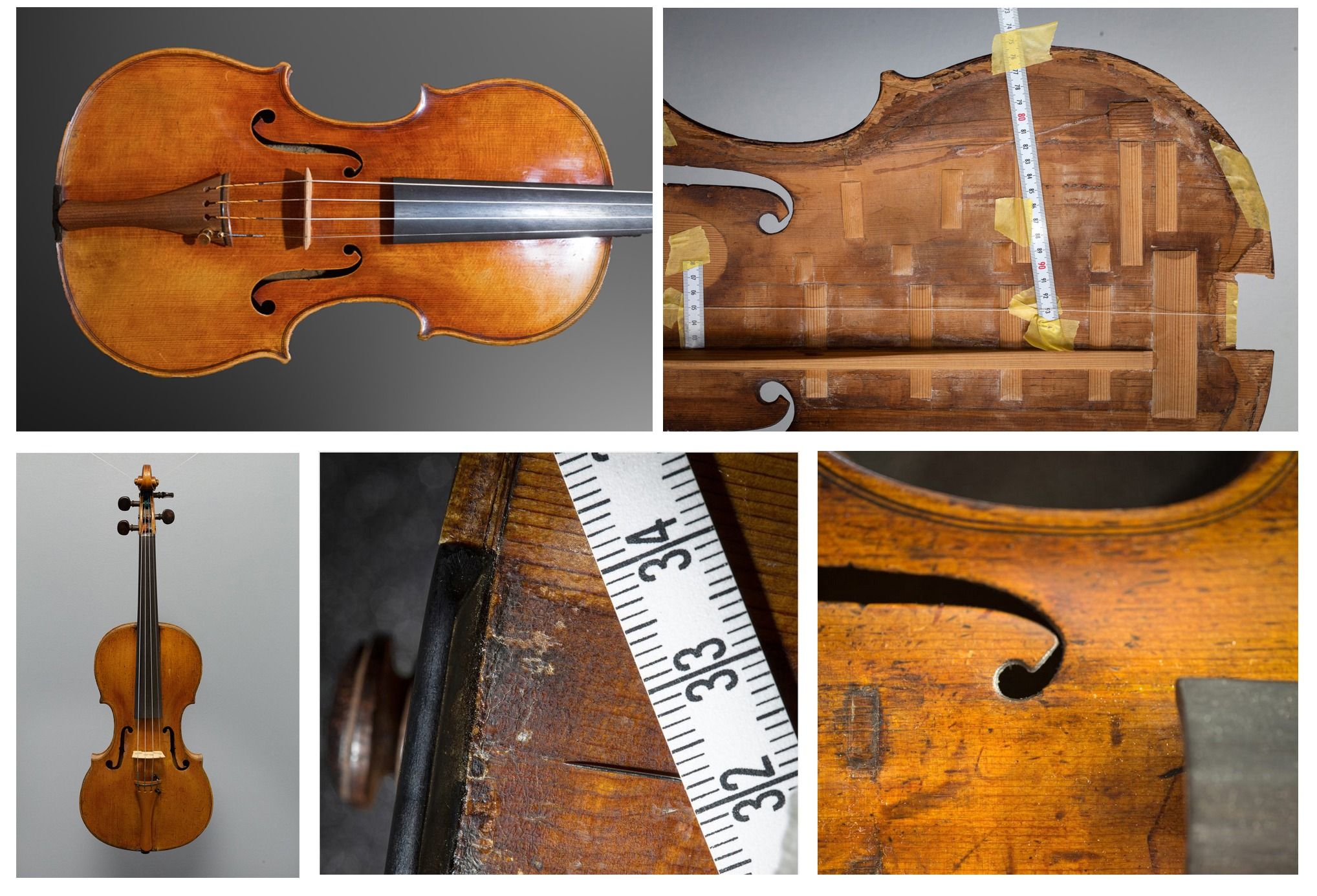
Dendrochronological dating of musical instruments is generally carried out in addition to the expertise of a reference violin maker.
When to involve Didier Pousset
- To look for dating evidence in a soundboard
- To compare its growth pattern with master forest chronologies
- To compare the instrument with available dendrochronological references
- To complement violin-making expertise with scientific study of the wood
Non-intrusive protocol
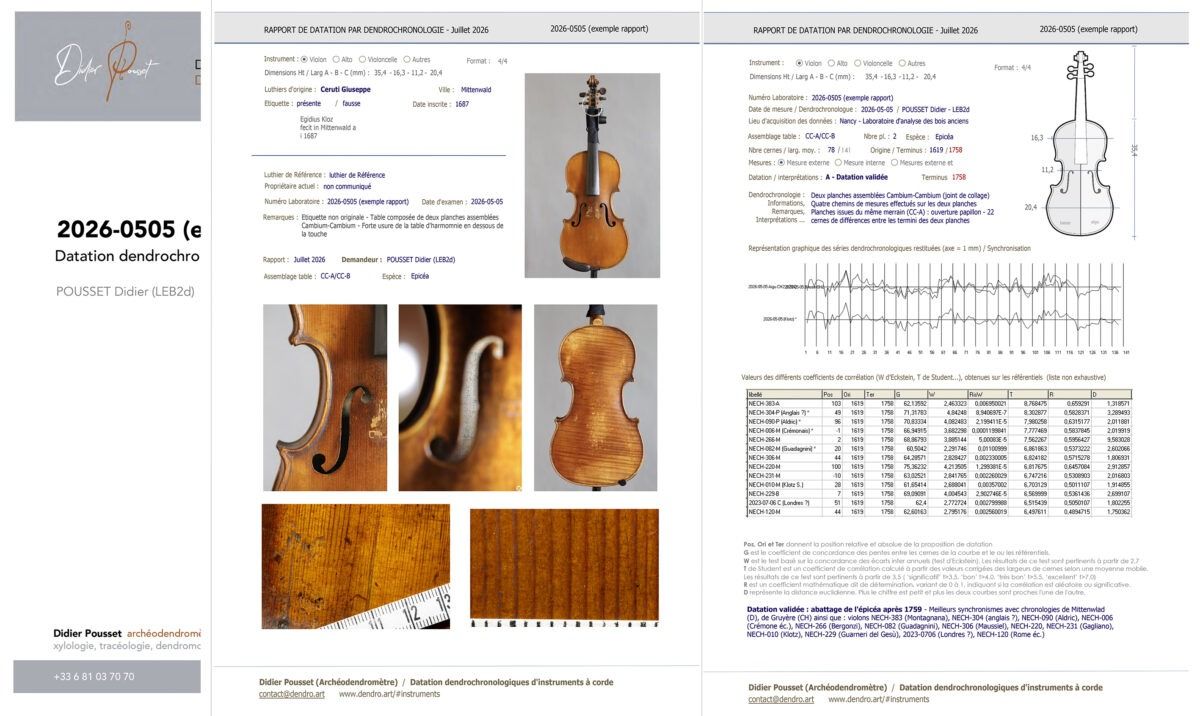
Without taking samples, the soundboard is recorded using high-definition digital images at x40 magnification. Tree-ring widths can then be measured to 0.01 mm and compared with master chronologies for spruce from the Alps, Bavaria, Tyrol, the Dolomites, the Jura and Vosges forests.
Feasibility and limits
The soundboard must have visible, usable rings. The quality and length of the series determine which comparisons are possible. A dendrochronological match provides information about the wood examined; on its own, it does not establish the maker, workshop, date of manufacture or value of the instrument, and it does not replace the violin maker’s expertise.
Traceability and reporting
The dendrochronological study of the soundboard also provides a permanent and invisible means of tracing the instrument.
A sample study report is shown below. The expected form and scope of reporting are agreed when the enquiry is framed.