The archaeodendrometric study of architectural timbers can provide evidence for chronology and authentication, contribute information about timber supply, and document how pieces were cut and shaped. On-site work can be carried out with conservation teams or before a project begins.
When to involve Didier Pousset
- To investigate the chronology of a roof structure, ceiling or timber frame
- To distinguish building phases or later alterations
- To identify species and document timber supply
- To study conversion, shaping, joints and tool marks
- To contribute material evidence to building archaeology or conservation work
Intervention and feasibility
The intervention can be prepared before a project or coordinated with conservation and building archaeology teams. Feasibility depends on access to the pieces, their condition, the number of usable rings and the possibility of assembling a representative group.
An absolute date or precise origin cannot be guaranteed for every timber. The findings provide chronological and technical evidence; they are not a structural assessment or a conservation prescription.
Reporting
The scope of reporting is agreed with the commissioning party. It can bring together observations of the timber, usable chronological findings and their relationship with the building phases under study.
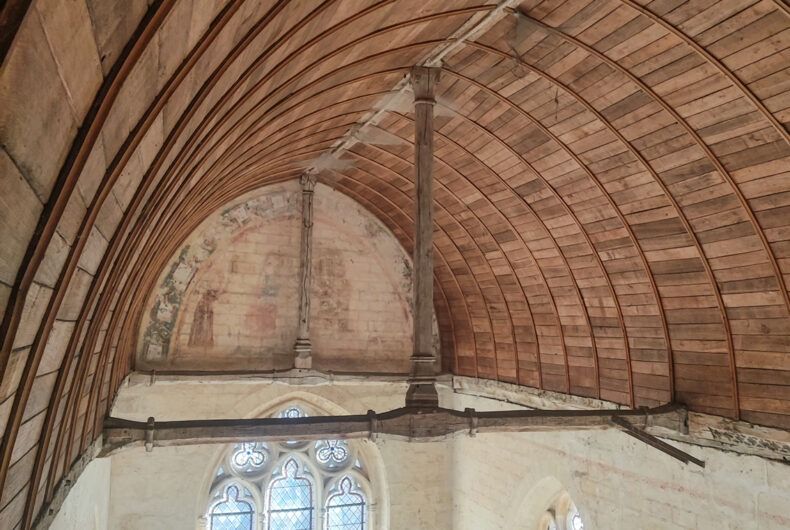
Frames of Saint-Jean church, Joigny
The oaks used in the apse and aisle frames were felled during the dormant seasons of 1757–1758, 1759–1760 and 1782–1783. Tool marks also establish that the pieces used in each structure are contemporary.
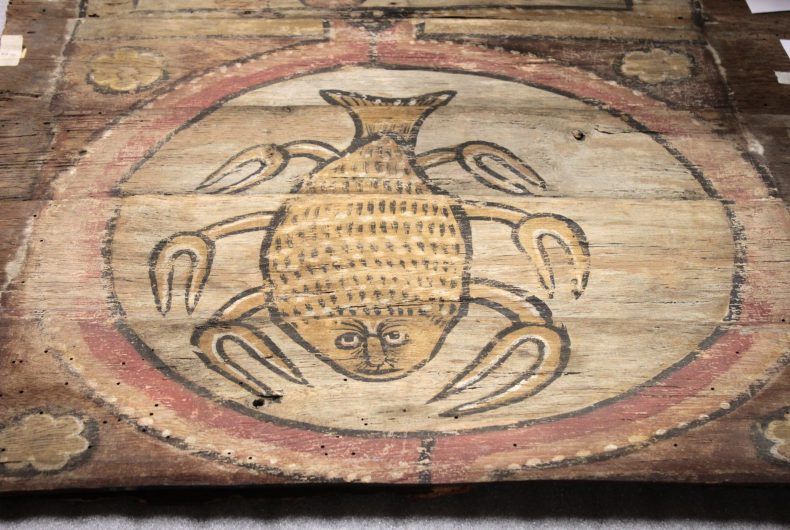
Bestiary ceiling, Metz — thirteenth century
Examination of two hundred boards showed that about twelve oaks were felled in autumn-winter 1218–1219 and immediately opened by tangential splitting before receiving their polychrome decoration.